

Forklift Forks
Blades & Tines
Fork-Co supplies Forklift Forks, also known as Forklift Blades or Tines, with custom configurations,
with Lease & Rental Options, tailored to your exact application and equipment needs.
Forklift forks—also known as forklift blades, tines, or teeth—are the primary load-bearing components of any forklift, responsible for safely lifting, supporting, and transporting materials across a wide range of industries. While terminology varies, their function remains critical to efficient and reliable material handling operations.
Fork-Co offers a comprehensive range of standard and custom forklift forks, engineered to match specific equipment, load capacities, and application requirements. From everyday warehouse use to specialized industrial applications, our forks are designed for durability, proper fitment, and long-term performance.
With multiple mounting styles, class options, and custom configurations available, Fork-Co ensures that each set of forks is built to deliver optimal handling, improved safety, and consistent performance in demanding environments.
Class Options and Configurations
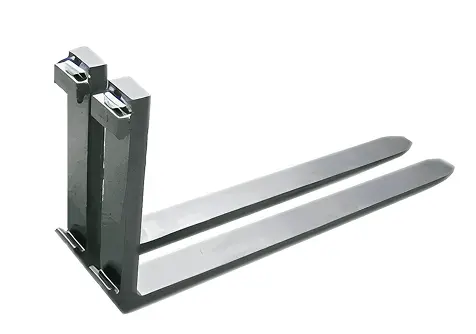
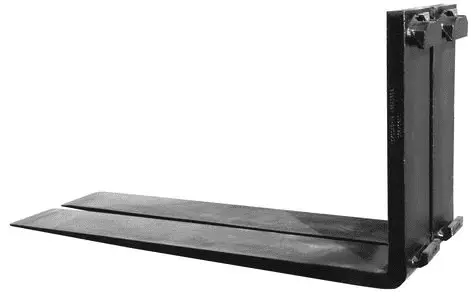
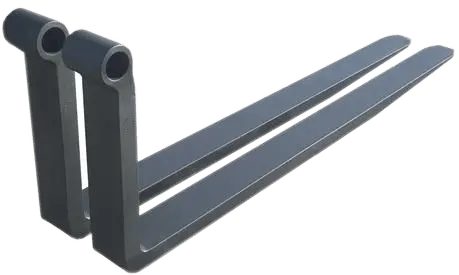
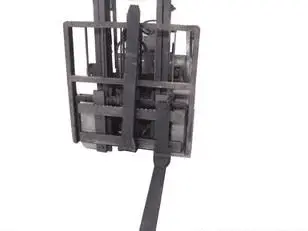
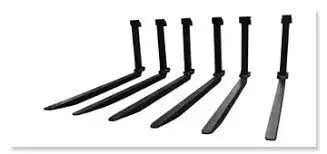
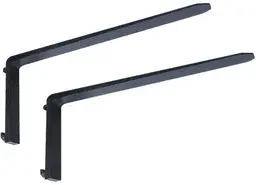
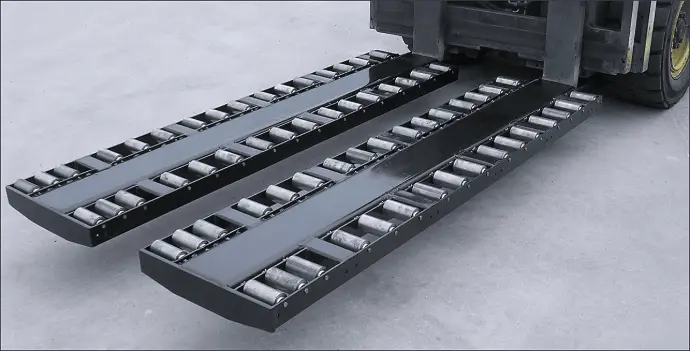
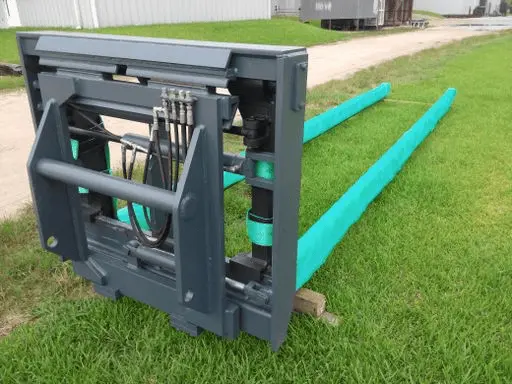


Description & Usage
Forklift forks are one of the most essential yet highly varied components in material handling. While commonly referred to by different names—forks, blades, or tines—their design, mounting style, and dimensions can vary significantly depending on the application, forklift type, and industry requirements.
- Also known as forks, blades, tines, or teeth
- Primary load-bearing component of a forklift
- Available in multiple mounting styles (hook-type and pin-type)
- Designed for a wide range of industries and material types
- Custom-engineered options available for specialized applications
Because there is no single universal configuration, selecting the right forklift forks depends on load capacity, carriage type, and intended use. Fork-Co works closely with customers to ensure proper fitment and optimal performance for every application.
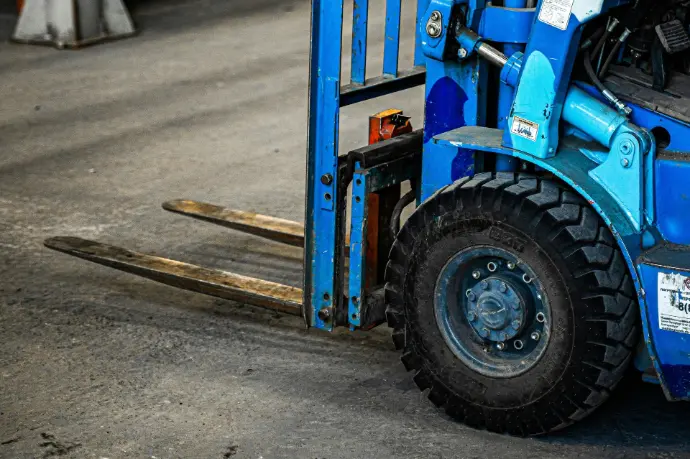
ITA / FEM Fork Classes Explained
Forklift forks are commonly categorized by ITA (Industrial Truck Association) / FEM classes, which standardize hook-type fork dimensions worldwide under ISO guidelines.
In North America, these classes are identified using Roman numerals:
- Class I: Up to 1,999 lbs @ 24” load center
- Class II: 2,000 – 5,500 lbs @ 24” load center
- Class III: 6,000 – 10,000 lbs @ 24” load center
- Class IV: 10,000 – 17,500 lbs @ 24” load center
- Class V: 17,500 – 24,000 lbs @ 24” load center
To determine your class, measure the carriage height (top of top bar to bottom of bottom bar):
- Class I: 13”
- Class II: 16”
- Class III: 20”
- Class IV: 25”
- Class V: 28.67”
Hook-type forks are further divided into Type “A” and Type “B”, which refer to differences in ground clearance when the mast is fully lowered. Type B forks can replace Type A, but not vice versa.
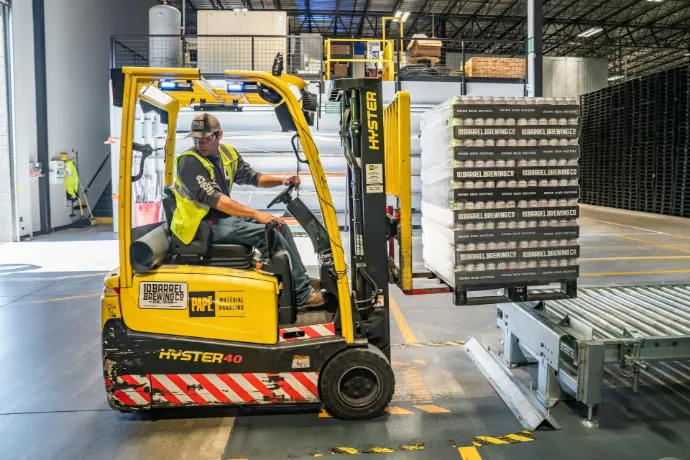
Industries & Applications
Forklift forks are used across a wide range of industries where safe, efficient material handling is critical. From standard pallet handling to highly specialized applications, the right fork design plays a key role in improving workflow and protecting materials.
- Lumber yards and wood product distribution
- Construction and building material supply
- Warehousing and logistics operations
- Manufacturing and industrial processing
- Recycling and scrap handling
- Mining and heavy equipment operations
- Food, beverage, and pharmaceutical handling (sanitary applications)
Whether handling palletized goods, sheet materials, coils, or specialty loads, selecting the correct fork type ensures better load control, improved efficiency, and reduced product damage.
Key Features of Forklift Forks, Blades, & Tines

Secure Load Control
Reduces shifting during transport.

Improved Operator Precision
Better placement and handling.

Heavy-Duty Construction
Built for rugged environments.

Customized Fitment
Designed for your equipment and loads.
What are they called again?
Forklift Forks are one of those common components of industry that, for some reason, manage to elude us in the establishment of a common vocabulary. Referred to in different circles as forks, forklift tines, forklift blades, forklift teeth, etc., they are essentially the load-bearing components on the front of standard configuration forklifts. Not only can we in the industry not come to a singular mind on what to call Forklift Forks, outside of the ITA/FEM Standard for Hook Type Forks (sometimes called Pin Type Forks) we have yet to see a standardization of design in how to affix the forks to the front of a Forklift and any number of other dimensions of the ever-so-simple, yet ever-so-complex forklift fork.
ITA / FEM Class Forks
Hook-ITA fork classes are the same worldwide under ISO standards. The standard FEM hook style fork arms come in two types, “A’ & “B”. The difference in the types reflect differences in the ground-to-carriage distance when the mast id fully lowered. Type “A” is primarily used for indoor and many outdoor trucks. Type “B” is primarily intended for outdoor trucks. However, the applications can be interchangeable. Type “B” forks can replace type “A” forks, but not vice-versa, because the type “A” would not reach the ground.
In North America, classes are designated by Roman numerals. The rest of the world uses Arabic numbers.
Hook Fork Classes
- Class I is forklifts up to 1,999 LB at 24” load center
- Class II is forklifts rated 2,000 LB through 5,500 LB @ 24” load center
- Class III is forklifts rated 6,000 LB to 10,000 LB @ 24” load center
- Class IV is forklifts rated 10,000 LB to 17,500 LB @ 24” load center
- Class V is forklifts are rated from 17,500 LB to 24,000 LB at a 24” load center
Can't tell what you have? Measure the Carriage Bars! ( Top of top to Bottom of bottom)
- Class I: 13”
- Class II: 16”
- Class III: 20”
- Class IV: 25”
- Class V: 28.67”
Under-Clearance by Type
- Class I a 3” Class I b : 4.5”
- Class II a 3” Class II b 6”
- Class III a 3” Class III b 8”
- Class IV a 5” Class IV b 10”
- Class V a 5” Class V b 10.12”
*Rough terrain trucks will possibly have higher under-clearance, but not always.
ITA / FEM Class Forks
Pin-type forks have no standard shape or size. They vary from OEM to OEM and by trucks within a brand. Because of this, we ask many questions of customers. We use 2 drawings to gain the dimensional data needed to make the forks fit. These tell us where the fork tubes are located. The most important dimension is the location of the tube center in relation to the rear face of the fork shank. This dimension tells us the “offset” or “inset” of the tube, or whether it is “in-line.” Concerning the rear face of the fork shank, offset means the tube center is located toward the driver. Inset means the tube center is located toward the load. In line means the center is directly above the rear face.
Block or Brick Forks
Block Forks are narrow forks, usually used in multiples, that enter the openings of concrete blocks that are turned on their sides. A layer of these blocks is used as the actual load-carrying pallet in unit loads of blocks.
Lumber and Plywood Forks
Lumber Forks or Full-Tapered Forks, or Full-Taper and Polished Forks, are made with a typical maximum thickness of 1.5 inches and in various widths, depending on the load weight. They are all made as full bottom taper forks, meaning the taper runs from the tip, back to approx. 2 inches from the bend. The top of the blade is polished, unpainted, for ease of entry and exit. Tips are thin with a top chamfer for chiseling between plywood sheets, and the tips are squared off, not rounded, to assist the chiseling effort. When these forks become very wide, they can block the driver’s visibility. Therefore, a “peek-a-boo” fork is used. This fork has a shank that is thicker than the blade. At a certain distance above ground level, the shank narrows to allow the driver better visibility.
ITA Class II & III Folding Forks
Folding Forks fold up against the shank. They are used to shorten the overall length of a forklift. Uses could be in space-restricted areas like elevators, or on forklifts that are transported on the platforms built onto the rear of flatbed trailers. The minimum thickness of these forks is 2 inches, and they are mostly in class II or III hook configurations.
Coil Forks
Coil Forks are used to handle steel or other coiled materials. These forks are made with the top corners of the blades chamfered or radiused to prevent scoring or denting of the inner layers. When both forks are used together in the core, only the top outer corners need this shape. If each fork is used to handle one coil each, then both top corners of the fork are chamfered.
Kiss Forks
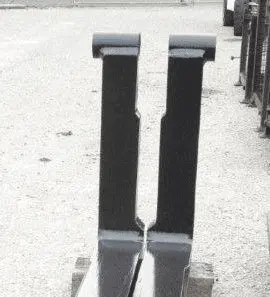
Kiss Forks are used to handle coils and are made with a bend in the lower shank. The bend shapes the fork shank so that even though the shanks are separated, they offset toward each other so that the blades “kiss” each other. The forks are then used in the core of the coil. The reason for this offset is that the center vertical support bar of the pin-type carriage on which they are used does not allow the forks to touch. The standard width from outside to outside of the forks when fully closed down may be too wide for the core.
Gypsum Forks
Gypsum Forks are forks having a tall shank that extends very high above the top hook. To this shank, a synthetic covering, usually replaceable, is added.
Tire Forks
Tire Forks are forks having a full-length bevel along the inner face of the fork. This bevel is used to allow the forks to slide under the tread of a tire or stack of tires for damage prevention and stability during handling. Tire forks have a blunt tip and no bottom taper.
Spark Retardant Forks
Spark retardant forks are used in hazardous operations where spark-proof forklifts are used or where sparks may cause combustion/explosion. These forks are brass-coated both on the blade and the face and sides of the shank. The brass is usually 1/8” thick and perhaps a little thicker on the bottom for wear resistance. The brass cladding is a weldment made to fit tightly onto the fork. It is not removable. Stainless steel cladding can be used for applications where sanitary requirements are prevalent: Pharmaceutical, Beverage, food processing, where the fork is exposed to the product in the manufacturing process.
Drum Forks
Drum forks are forks having the inside of the blade radiused to match the wall of a standard steel 55-gallon drum. This design is used on fork positioners and pallet fork clamps. These cut-out forks can be configured as one cut-out on each fork to handle single drums or two drums side by side, or two cut-outs per fork to handle two drums or four drums. The thickness of these forks should be increased due to a loss of capacity caused by the radius cuts.
Find the Forklift Forks for Your Application
Not sure which Forklift Forks are right for your operation? Our team can help you select the best configuration based on your load requirements and application.
Request a Quote or Contact Fork-Co today to get started!
Fork-Co Leads the Pack
With our industry-best lead times (4-5 weeks on complex builds), full in-house engineering and design team, on-site manufacturing and fabrication facility just south of Houston, TX, and vast standard product inventory, Fork-Co is the right choice for your project. We stand behind our products 100%, either it accomplishes your goals, or we aren't done.

To install this Web App in your iPhone/iPad press
 and then Add to Home Screen.
